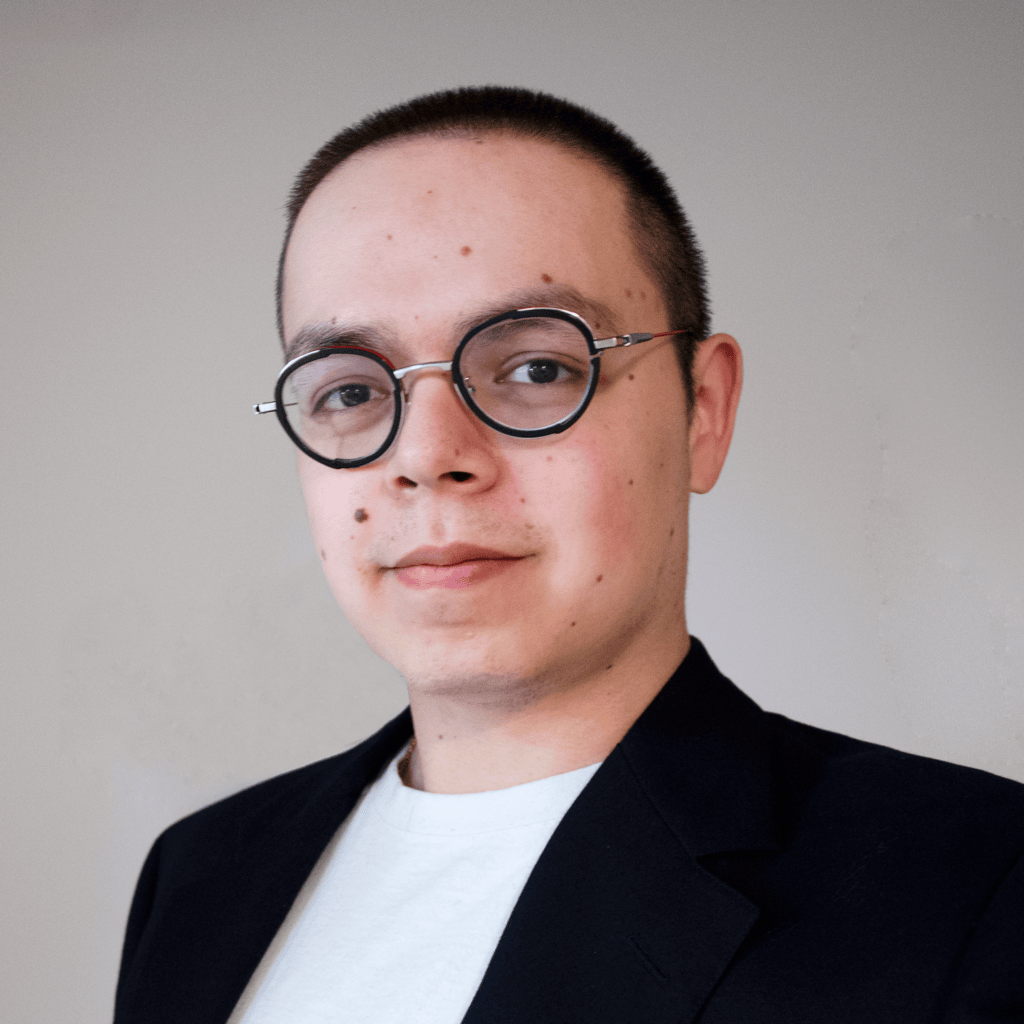
I am currently a PhD student in computer engineering at Polytechnique Montréal.
My research is supervised by Prof. Bentley Oakes.
I have a strong interest in robotics & simulation, self-adaptive systems, 3D visualization, Human-Computer Interaction, and XR/Virtual Reality. I am particularly passionate about Digital Twins because they integrate all of these concepts to create autonomous and intelligent systems.
Check out my projects page to find out more about my school/personal projects.
Academic Background
I previously pursued a research Master of Applied Science (M.A.Sc) in computer engineering focusing on systematic Digital Twin reporting and visualization at Polytechnique Montréal, from which I fast-tracked to a PhD. This Master’s was part of a double degree program with the École Centrale de Nantes, my French engineering school.
In France, I was enrolled in the engineering program (equivalent to a Master of Science in Engineering, see Grande École). In my first year, I received a multidisciplinary education covering a wide range of topics. In my second year, I focused on computer science for virtual reality.
First Year: Continuum Mechanics for Elasticity, Materials, Numerical Analysis, Algorithmics and Programming, Energy, Environment and Climate Challenges, Physics and Fluid Dynamics, Signals and Systems, Linear Control, Project Engineering, Life Cycle and Impact Analysis, Thermodynamics and Energy Systems, Instrumentation, Sensors and Automatic Control, Probability and Statistics, Information Systems, Computer-Aided Design and Modelling, Structural Dynamics
Second Year: C++ Programming, Advanced Concepts in Virtual Reality and Augmented Reality, Fundamentals of Virtual Reality, Hands in VR: Simulation and Interaction in Virtual Reality, 3D Real-Time Computer Graphics, Collision Detection and Haptic Feedback, From Physical Geometry to 3D Virtual Models, Virtual Reality Applications: Conferences, 3D Interaction, Industrial Software Development, Computer Vision and Augmented Reality, Scientific Visualization
After my second year, I completed a 5-month internship at Naval Group Pacific in Adelaide, Australia. I was supervised by Prof. Cédric BUCHE. During this internship, I engineered multi-agent drone simulations in maritime environment for the LOTUSim combat Digital Twin. I extensively used ROS2 and the Gazebo robotics simulation tool in C++ and Python. I was part of the CNRS International Research Lab IRL CROSSING in an R&D team. In July 2023, I was an intern at the Orange Innovation lab in Lannion, France, where I implemented automated drift verification for anechoic chamber measurements, enhancing calibration accuracyfor 5G/6G antenna arrays.
To gain admission to the École Centrale de Nantes, I completed an intensive and highly selective program called Classes Préparatoires aux Grandes Écoles (Preparatory Classes) at Lycée Chateaubriand in Rennes, France, where I studied mathematics, physics, chemistry, and computer science. This program gives access to top engineering schools on the basis of a national competitive examination.
Mathematics: Algebra and Trigonometry, Calculus, Complex Analysis, Linear Algebra, Differential Equations, Numerical Methods, Real Analysis, Functional Analysis, Topology, Probability Theory, Statistical Methods, Optimization, Mathematical Modeling, Abstract Algebra, Geometric Analysis
Physics: Wave Phenomena, Electromagnetism, Optics, Classical Mechanics, Fluid Mechanics, Principles of Thermodynamics, Statistical Thermodynamics, Quantum Mechanics, Quantum Systems
Chemistry: Thermodynamics of Chemical Transformations, Electrochemistry, Equilibrium and Kinetics
Computer Science: Programming Fundamentals, Algorithm Analysis, Graph Theory, Data Structures, Programming Languages, Dynamic Programming, Automata Theory, Logic and Deduction, Python, OCaml
News
- 2026-01-07: I presented a demo of DTInsight at the Use Case and Digital Twin Factory Workshop in Lyon, France
- 2026-01-01: I fast-tracked my Master’s to a PhD at Polytechnique Montréal.
- 2025-10-07: I presented DTInsight at EDTconf 2025. I also presented its poster and was a student volunteer at MODELS 2025
- 2025-09-22: I presented DTInsight at the SEMTL meeting at UdeM in Montréal
- 2025-08-05: Our paper DTInsight: A Tool for Explicit, Interactive, and Continuous Digital Twin Reporting has been accepted at the 2nd International Conference on Engineering Digital Twins (EDTconf 2025), co-located with 28th International Conference on Model Driven Engineering Languages and Systems (MODELS 2025)
- 2025-06-19: I presented the “What is a “Digital Twin” and How Do I Build One?” tutorial with Prof. Bentley Oakes at the Software Engineering for Machine Learning Applications Symposium (SEMLA 2025) at Polytechnique Montréal
- 2025-04-30: I attended the 20th International Conference on Software Engineering for Adaptive and Self-Managing Systems (SEAMS 2025) co-hosted at the 47th International Conference on Software Engineering (ICSE 2025) in Ottawa